

Skip to content
OncoAlert home
  • Newsletter
  • News
  • Congresses
  • Tumor sites
  • Colloquium
  • Series
  • About
Subscribe
MenuClose
  • Newsletter
  • News
  • Congresses
    • On demandESMO 2026 highlights
    • 4Sight
    • On The Go
    • Podium2Screen
    • Congress tracker
    • Past coverage
    • Recent coverage

      • ESMO 2025, Berlin
      • ASCO 2025, Chicago
  • Tumor sites
    • Breast
    • Lung and thoracic
    • Genitourinary
    • Gastrointestinal
    • More tumor sites

      • Gynecologic
      • Hematologic
      • Melanoma and skin
      • Head and neck
      • Sarcoma
    • Across disciplines

      • Radiation oncology
      • Supportive care
      • Geriatric oncology
  • Colloquium
    • The 2026 Colloquium
    • Watch the talks
    • Every Colloquium
    • The 2026 program

      • Genitourinary
      • Breast
      • Gastrointestinal
      • Gynecologic
      • Lung and supportive care
      • Melanoma, hematology and more
      • How I treat when options are limited
  • Series
    • OncoAlert Horizons
    • Oncology Here & Now
    • Listen to Oncology Here & Now

      • Apple Podcasts
      • Spotify
      • Amazon Music
      • YouTube
  • About
    • About OncoAlert
    • Faculty
    • Contact
ESMO 2026On demandMadrid, October 23–27See the ESMO 2026 highlightsSubscribe to the newsletter
  • On demandESMO 2026 highlights
  • 4Sight
  • On The Go
  • Podium2Screen
  • Congress tracker
  • Past coverage

Recent coverage

  • ESMO 2025, Berlin
  • ASCO 2025, Chicago
ESMO 2026On demandMadrid, October 23–27See the ESMO 2026 highlights
  • Breast
  • Lung and thoracic
  • Genitourinary
  • Gastrointestinal

More tumor sites

  • Gynecologic
  • Hematologic
  • Melanoma and skin
  • Head and neck
  • Sarcoma

Across disciplines

  • Radiation oncology
  • Supportive care
  • Geriatric oncology
NADIM: five-year outcomesPerioperative chemotherapy plus nivolumab in resectable stage IIIA NSCLC: 5-year progression-free survival of 65%.Latest highlight, from The Lancet Oncology
  • The 2026 Colloquium
  • Watch the talks
  • Every Colloquium

The 2026 program

  • Genitourinary
  • Breast
  • Gastrointestinal
  • Gynecologic
  • Lung and supportive care
  • Melanoma, hematology and more
  • How I treat when options are limited
The OncoAlert Colloquium emblemThe OncoAlert ColloquiumThe year in review in oncology, one tumor group a day. Free for oncology professionals.
  • OncoAlert Horizons
  • Oncology Here & Now

Listen to Oncology Here & Now

  • Apple Podcasts
  • Spotify
  • Amazon Music
  • YouTube
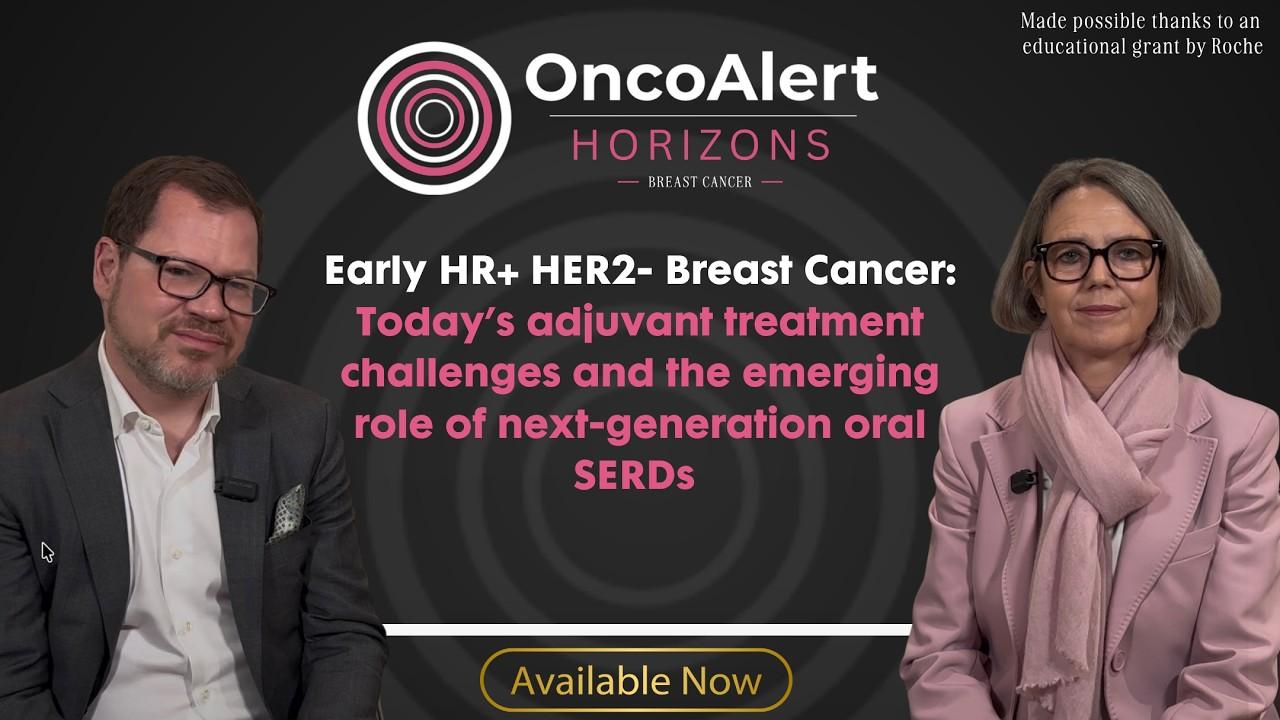
The newest Horizons discussionAdjuvant treatment challenges in early HR+/HER2− breast cancer, with Dr. Sibylle Loibl and Dr. Rupert Bartsch.
  • About OncoAlert
  • Faculty
  • Contact

What’s changing in oncology? Giredestrant, NGS, HER2-targeted therapy, FDA approvals & more

The OncoAlert Newsletter, October 1, 2026. The week from September 24.

SpotlightFDA newsLungGUBreastGIRadiationMeetingsCOR2ED
Newsletter banner

Spotlight publication

Giredestrant plus Everolimus in Advanced Breast Cancer

Mayer E … Rugo H. NEJM.

Take-home. Giredestrant plus everolimus significantly prolonged progression-free survival compared with standard endocrine therapy plus everolimus, with the greatest benefit observed in ESR1-mutated tumors.

This phase 3 trial evaluated giredestrant plus everolimus versus standard endocrine therapy plus everolimus in ER-positive/HER2-negative advanced breast cancer after CDK4/6 inhibitor treatment. Among patients with ESR1-mutated tumors, median progression-free survival was 10.0 versus 5.5 months (HR 0.38); in the overall population, it was 8.8 versus 5.5 months (HR 0.56). Adverse-event rates were similar between groups, with stomatitis, diarrhea, and anemia most common.

Read the paper: Giredestrant plus Everolimus in Advanced Breast Cancer (opens a new tab)

Effect of Screening with Multicancer Early-Detection Test on Late-Stage Cancer Diagnosis

Sasieni P … Swanton C. NEJM.

Take-home. Three rounds of multicancer blood-based screening did not reduce the incidence of stage III/IV cancers, although a possible reduction in stage IV disease warrants longer follow-up.

In this randomized English trial, 142,250 adults aged 50–77 were assigned to multicancer blood-based screening plus usual care or usual care alone. After three annual screening rounds, the primary endpoint (incidence of stage III/IV cancers across 12 prespecified cancers) did not differ significantly between groups (incidence rate ratio 1.03). Stage IV cancer incidence was lower with screening (IRR 0.86), but further follow-up is needed to clarify clinical significance and long-term effects.

Read the paper: Effect of Screening with Multicancer Early-Detection Test on Late-Stage Cancer Diagnosis (opens a new tab)See the highlight: Effect of Screening with Multicancer Early-Detection Test on Late-Stage Cancer Diagnosis

Newsletter banner

FDA news

FDA Priority Review granted for durvalumab plus neoadjuvant enfortumab vedotin in muscle-invasive bladder cancer

AstraZeneca.

The FDA granted Priority Review to AstraZeneca’s supplemental application for durvalumab plus enfortumab vedotin in cisplatin-ineligible or cisplatin-declining patients with muscle-invasive bladder cancer. The application is based on VOLGA, a phase III trial in which perioperative durvalumab plus neoadjuvant enfortumab vedotin significantly improved event-free and overall survival versus radical cystectomy with or without approved adjuvant therapy.

Read the announcement: FDA Priority Review granted for durvalumab plus neoadjuvant enfortumab vedotin in muscle-invasive bladder cancer (opens a new tab)

FDA approves belzutifan in combination with lenvatinib for advanced renal cell carcinoma with a clear cell component

FDA.

The FDA approved belzutifan plus lenvatinib for adults with advanced clear cell renal cell carcinoma after PD-1/PD-L1 inhibitor treatment, based on LITESPARK-011. In 747 patients, the combination significantly improved median PFS versus cabozantinib (14.6 vs 10.6 months; HR 0.74) and increased ORR (53% vs 40%). Final OS was not statistically significant (33.7 vs 28.6 months; HR 0.85). Key safety concerns include anemia, hypoxia, hypertension, and cardiac dysfunction.

Read the announcement: FDA approves belzutifan in combination with lenvatinib for advanced renal cell carcinoma with a clear cell component (opens a new tab)

Lung cancers

Efficacy and safety of HER2 directed therapies for advanced HER2-mutant non-small-cell lung cancer: a systematic review and meta-analysis

Li M … Soo R. JTO.

Take-home. HER2 TKIs showed higher response rates and fewer severe adverse events than ADCs, while ADC efficacy appeared preserved after prior TKI therapy.

This meta-analysis pooled seven prospective trials involving 916 patients with advanced HER2-mutant NSCLC. HER2 TKIs had a higher pooled objective response rate than ADCs (65% vs 57%), particularly for YVMA insertions (74% vs 57%). Responses were similar for non-YVMA TKD mutations and non-TKD mutations. ADC activity appeared preserved after prior TKI exposure, whereas TKI activity decreased after ADC treatment. Grade ≥3 adverse events were more frequent with ADCs.

Read the paper: Efficacy and safety of HER2 directed therapies for advanced HER2-mutant non-small-cell lung cancer: a systematic review and meta-analysis (opens a new tab)

Real-World Association Between Up-Front Next-Generation Sequencing and Overall Survival in Advanced Non–Small Cell Lung Cancer in the United States

Scott S … Levy B. JCO Precision Oncology.

Take-home. Up-front NGS before first-line therapy was associated with earlier targeted treatment and longer overall survival in advanced NSCLC.

This retrospective Flatiron Health study evaluated 13,139 patients with advanced NSCLC to assess whether timing of genomic testing influenced overall survival. Up-front NGS was associated with greater use of targeted therapy (22.6% vs 14.8% after first-line therapy) and longer median OS (20.9 months vs 17.5 months with non-NGS testing and 18.2 months with delayed NGS). Multivariable analyses suggested the survival association was primarily related to treatment selection.

Read the paper: Real-World Association Between Up-Front Next-Generation Sequencing and Overall Survival in Advanced Non–Small Cell Lung Cancer in the United States (opens a new tab)

GU cancers

Carboplatin in patients with metastatic castration-resistant prostate cancer harboring somatic or germline homologous recombination repair gene mutations: phase II single-arm trial (CIPHER)

Jain R … Batra A. ESMO Open.

Take-home. Carboplatin demonstrated meaningful antitumor activity in HRR-altered mCRPC, particularly with BRCA1/2 alterations, but substantial hematologic toxicity was common.

This phase II single-arm study evaluated carboplatin in 39 men with HRR-altered mCRPC previously treated with docetaxel and/or androgen-receptor pathway inhibitors. PSA50 response occurred in 41%, with median radiographic PFS of 4.53 months and response duration of 6.93 months. BRCA1/2-altered tumors showed particularly durable responses. Grade ≥3 adverse events occurred in 59%, mainly hematologic, while overall quality of life remained largely preserved during treatment.

Read the paper: Carboplatin in patients with metastatic castration-resistant prostate cancer harboring somatic or germline homologous recombination repair gene mutations: phase II single-arm trial (CIPHER) (opens a new tab)

Pretreatment Tumor NECTIN4 RNA Expression Is Associated with First-line Enfortumab Vedotin Plus Pembrolizumab Efficacy in Metastatic Urothelial Cancer

Chi B … Galsky M. European Urology.

Take-home. Pretreatment NECTIN4 expression and TMB may help identify patients more likely to benefit from first-line enfortumab vedotin plus pembrolizumab.

In a real-world cohort of 322 patients with metastatic urothelial cancer treated first-line with enfortumab vedotin plus pembrolizumab, high tumor NECTIN4 RNA expression and high TMB were each associated with better overall survival and response rates. NECTIN4 remained independently predictive after multivariable adjustment, while its association was not observed with pembrolizumab monotherapy. Patients with both low NECTIN4 and low TMB had the least favorable outcomes.

Read the paper: Pretreatment Tumor NECTIN4 RNA Expression Is Associated with First-line Enfortumab Vedotin Plus Pembrolizumab Efficacy in Metastatic Urothelial Cancer (opens a new tab)

Progression-free survival and objective response rate as a surrogate end point for overall survival in metastatic renal cell carcinoma: A systematic review and meta-analysis

Leong R … Srinivas R. Cancer.

Take-home. PFS and ORR correlate with OS in metastatic renal cell carcinoma, but their context-dependent and inconsistent performance means they cannot reliably substitute for OS.

This systematic review and meta-analysis included 62 randomized trials involving 24,518 patients with metastatic renal cell carcinoma. Treatment effects on PFS and ORR showed moderate correlations with OS, but neither endpoint demonstrated sufficiently consistent surrogacy to reliably predict survival benefit. Results varied across treatment settings and were often imprecise in subgroups, with limited non–clear cell representation. Substantial trial heterogeneity further limits interpretation and supports continued reliance on OS.

Read the paper: Progression-free survival and objective response rate as a surrogate end point for overall survival in metastatic renal cell carcinoma: A systematic review and meta-analysis (opens a new tab)

Breast cancers

A multi-omics analysis of advanced triple-negative breast cancer identifies predictors to chemo-immunotherapy and on-treatment dynamics

Van Renne N … Buisseret L. Cell Reports Medicine.

Take-home. Immune-rich tumor microenvironments predict better ICI outcomes, whereas fibrovascular and myeloid remodeling appear to drive resistance in advanced TNBC.

This study analyzed advanced triple-negative breast cancer treated with chemo-immunotherapy using transcriptomics, genomics, and spatial immune profiling. A transcriptomic PFS-risk signature stratified outcomes across ICI-treated cohorts. Immune-enriched tumors with organized lymphoid structures had better outcomes, whereas fibrotic and angiogenic tumors, often with PI3K alterations, had poorer outcomes. Early progression was associated with fibrovascular remodeling, macrophage expansion, and immunosuppressive signaling, identifying potential mechanisms and targets of ICI resistance.

Read the paper: A multi-omics analysis of advanced triple-negative breast cancer identifies predictors to chemo-immunotherapy and on-treatment dynamics (opens a new tab)See the highlight: A multi-omics analysis of advanced triple-negative breast cancer identifies predictors to chemo-immunotherapy and on-treatment dynamics

GI cancers

Evorpacept plus trastuzumab, ramucirumab and paclitaxel in HER2-positive gastric cancer: a randomized phase 2 trial

Shitara K … Lee KW. Nature Medicine.

Take-home. Evorpacept plus TRP showed promising response rates, especially in patients with retained HER2 positivity, but the study did not fully meet its predefined efficacy criteria.

ASPEN-06 evaluated evorpacept plus trastuzumab, ramucirumab and paclitaxel in pretreated HER2-overexpressing advanced gastric/GEJ cancer. The combination produced higher objective response rates than TRP alone, particularly in patients with HER2 positivity confirmed on a fresh biopsy. However, responses did not meet the prespecified statistical threshold versus the historical 30% benchmark in the overall population. Safety was broadly similar, although hematologic toxicities were more frequent with evorpacept.

Read the paper: Evorpacept plus trastuzumab, ramucirumab and paclitaxel in HER2-positive gastric cancer: a randomized phase 2 trial (opens a new tab)

Extended Follow-up of Botensilimab plus Balstilimab in an Expanded Cohort of Microsatellite-Stable Metastatic Colorectal Cancer without Active Liver Metastases

Schlechter B … Segal N. Clinical Cancer Research.

Take-home. Botensilimab plus balstilimab showed durable responses and encouraging survival in heavily pretreated MSS mCRC without active liver metastases, supporting further investigation.

In this phase Ib study, botensilimab plus balstilimab was evaluated in 123 heavily pretreated patients with MSS metastatic colorectal cancer without active liver metastases. After median 20.2-month follow-up, the objective response rate was 21%, with median progression-free survival of 4.0 months and overall survival of 21.2 months. Responses were durable, and efficacy remained similar in patients previously exposed to late-line therapies. Diarrhea and fatigue were the most common treatment-related toxicities.

Read the paper: Extended Follow-up of Botensilimab plus Balstilimab in an Expanded Cohort of Microsatellite-Stable Metastatic Colorectal Cancer without Active Liver Metastases (opens a new tab)

Radiation oncology

ESTRO recommendations for the use, planning and delivery of reirradiation in locally recurrent rectal cancer, endorsed by ASTRO

Paulen H … Muirhead R. Radiotherapy & Oncology.

Take-home. Reirradiation is a feasible component of multimodal treatment for locally recurrent rectal cancer, but careful patient selection, advanced radiation techniques, and attention to cumulative organ dose are essential.

These ESTRO recommendations provide practical guidance for reirradiation of locally recurrent rectal cancer, covering patient selection, treatment intent, dose, planning, and delivery. Recommended approaches include 30–40 Gy reirradiation, with SBRT for selected small recurrences and particle therapy at experienced centers. Cumulative normal-tissue dose should be assessed, with IMRT/VMAT and daily image guidance encouraged. However, evidence quality is generally low, so recommendations largely rely on expert consensus.

Read the paper: ESTRO recommendations for the use, planning and delivery of reirradiation in locally recurrent rectal cancer, endorsed by ASTRO (opens a new tab)

Newsletter banner

Upcoming meetings

  • International Symposium of Gastrointestinal Oncology (ISGIO)

    October 2–3, 2026. Fort Lauderdale, Florida, or online.

    A multidisciplinary program on the latest advances in GI cancer research, biomarkers, and personalized treatment. Hybrid.

    Meeting details: International Symposium of Gastrointestinal Oncology (ISGIO) (opens a new tab)

  • 2nd International Multidisciplinary Consensus on the Integration of Radiation Therapy with New Systemic Treatments

    October 9–10, 2026. Florence, Italy.

    Endorsed by ESTRO.

    Meeting details: 2nd International Multidisciplinary Consensus on the Integration of Radiation Therapy with New Systemic Treatments (opens a new tab)

  • The Uromigos

    November 2026. Nashville, TN.

    Days of GU discussions with The Uromigos (Brian Rini and Tom Powles).

    Meeting details: The Uromigos (opens a new tab)

  • 44th Annual Chemotherapy Foundation Symposium (CFS): Innovative Cancer Therapy for Tomorrow

    November 11–13, 2026. New York, NY, or online.

    Three days on practice-changing developments across solid tumors and hematologic malignancies. Hybrid.

    Meeting details: 44th Annual Chemotherapy Foundation Symposium (CFS): Innovative Cancer Therapy for Tomorrow (opens a new tab)

  • 2026 IKCS: North America

    November 19–21, 2026. Dallas, TX.

    A multidisciplinary meeting on the future of kidney cancer care.

    Meeting details: 2026 IKCS: North America (opens a new tab)

  • 2026 Global Forum in GU Oncology

    December 2–5, 2026. Amsterdam, Netherlands.

    The Mirrors of Medicine forum on translating the latest advances in oncology into clinical practice.

    Meeting details: 2026 Global Forum in GU Oncology (opens a new tab)

From COR2ED

  • HER2-mutant NSCLC update from WCLC 2026

    Thoracic oncologist Dr. Joshua Sabari reports on the latest data in HER2-mutant non-small cell lung cancer from WCLC 2026, in a video update with his slides.

    COR2ED states that this educational program is supported by an independent educational grant from Bayer and is intended for health care professionals only.

    Watch on COR2ED: HER2-mutant NSCLC update from WCLC 2026 (opens a new tab)

Thank you for your support, and please feel free to forward this issue to colleagues.

Best regards,

Signed by

  • Dr. Gil MorganFounder and Executive Director, The OncoAlert Network
Later issueTHE COMPLETE ESMO26 NEWSLETTER : Every key trial from Madrid, curated by oncologistsEvery issue

The week in oncology, in your inbox

The OncoAlert Newsletter goes to 10,000+ oncologists and cancer stakeholders: every week, and every day during the major congresses. Free, independent, GDPR-compliant and easy to leave.

How we use your details

OncoAlert

The OncoAlert Network is a registered non-profit NGO, founded in 2019 as a voluntary network of oncologists and patient advocates.

OncoAlertNetwork@OncoAlert360.com

Coverage

  • News
  • The newsletter
  • Congresses
  • 4Sight
  • The Colloquium
  • OncoAlert Horizons
  • Oncology Here & Now

The network

  • Faculty
  • About OncoAlert
  • How we are funded
  • Contact

Follow

  • X
  • LinkedIn
  • YouTube
  • Instagram
  • Facebook

© 2026 The OncoAlert Network

Privacy
